From control to coexistence: The emergence of Europe’s next industrial revolution
 If control was the language of the 20th century, coexistence will define the 21st. The next wave of industrial progress will be built on a more sustainable, human and resilient way of creating value – and Europe has the potential to lead this progress globally, as Fernando Colás, chief executive officer at OMRON Industrial Automation Europe, explains.
For more than 200 years, manufacturing has been built upon the single principle of control. It delivered scale, efficiency, and global supply chains, but it was designed for a predictable world.
Today, as Europe’s manufacturers face energy uncertainty, labour shortages, and mounting sustainability pressures, a new industrial model is emerging: one that replaces rigid control with flexible coexistence – providing a framework in which people, machines, and the planet work together, through autonomy and collaboration, towards a shared purpose.
The limits of control
Since the Industrial Revolution, manufacturers have been working on gaining ever greater control – over their machines, processes, resources, and manpower.
The introduction of the steam engine in the late 1700s allowed factories to run machinery at a predictable, steady speed for the first time, for example, while the moving assembly line established control over the flow and pace of production. Control has powered mass production and enabled global supply chains, but it is reaching its limits.
To control a parameter, we first need to predict it. Yet, as Ikuo Tateishi, president of the Human Renaissance Institute and grandson of OMRON’s founder, Kazuma Tateishi, highlighted at Osaka Expo 2025, today’s world is anything but predictable.
Towards coexistence
As a society, we face climate volatility, energy insecurity, demographic contraction, and geopolitical fragmentation. In Europe, energy costs are high, labour is scarce, and global is competition is intense.
In this landscape, success will depend not on harnessing control to accelerate scale or speed, but on our ability to combine technology, human values, and collaboration into a more resilient model of progress. The key is replacing the pursuit of control with adaptive, co-created networks that connect people, machines and the planet.
More than 50 years ago, Kazuma Tateishi predicted that society would evolve from a focus on efficiency and optimisation, to autonomous systems that can self-organise and learn. He foresaw a so-called ‘natural society’ where humans, technology and nature coexist in balance.
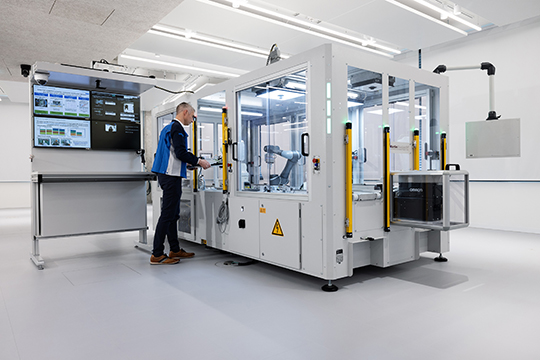
We now see his theory unfolding in factories around the world. Machines that sense, decide and adapt in real time, production systems that respond dynamically to variation, and factories that share operational data to improve energy and material efficiency have all become realities.
This machine autonomy is not about removing people, but amplifying their intent. Moving from control to coexistence means enabling technology that listens, collaborates, and creates space for human creativity and purpose.
Six shifts toward a coexistence economy
Moving from control to coexistence requires a fundamental rethink of how manufacturing is designed and run. The path ahead is not a single innovation, but a connected transformation across technology, culture and collaboration.
 Europe’s manufacturing future depends on six key shifts. The first is from isolated efficiency to systemic resilience – moving beyond pure productivity to systems that can adapt, predict disruption, and remain stable in volatile conditions. Manufacturers also need to move from competition to co-creation, collaborating across industries, governments and research to solve shared challenges and accelerate innovation for the greater good.
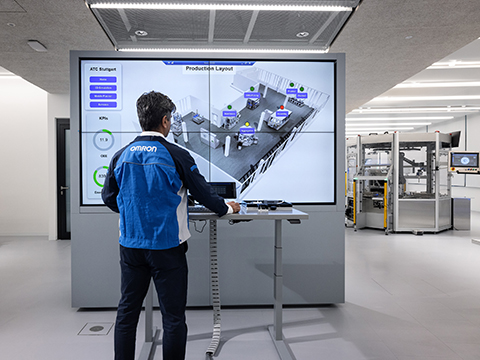
In addition, we must move from linear production to circular design, replacing take-make-dispose models with systems that reduce waste, recover materials and regenerate energy. At the same time, we must also shift from central control to distributed intelligence, enabling autonomous, connected systems that learn locally but improve globally, thereby increasing agility and resilience across the system.
As automation advances, the focus must expand from efficiency to transparency, building trust through explainable, ethical, and accountable systems that people can understand and oversee. Finally, predictability must give way to adaptability, with flexible organisations and technologies that can respond quickly to change without sacrificing stability.
Together, these six key shifts define a manufacturing model where people, technology, and the environment coexist to create sustainable, resilient value.
A realistic path forward
Every industrial revolution has been an upgrade of our collective operating system, and the upcoming step change is no exception. Yet moving from control to coexistence will not be easy.
While success will rely on industry, technology and society evolving together, the political and economic climate in many regions already favours protectionism over collaboration. Together, we must highlight our shared purpose and build an understanding of the mutual benefits of coexistence.
There are also legitimate concerns around job displacement, data security and ethical AI, all of which must be addressed sympathetically and with transparency. We need to share the message that coexistence is not about replacing people with machines, but reconnecting technology to purpose.
Visit the OMRON website for more information